How Household Chores for Kids Become Powerful Learning Opportunities
Household chores for kids are more than just daily tasks—they are powerful learning opportunities that help children develop life skills, responsibility, and independence. When parents assign age to their children, they are not just keeping the home tidy—they are preparing their kids for a successful future. This article explores how household chores for kids can be transformed into meaningful learning experiences, why they matter for every child and family, and how to make the most of these everyday household tasks.
Why Household Chores For Kids Matter
Many parents wonder if household chores for kids are really necessary. The answer is a resounding yes. Research shows that chores help children of all ages develop essential life skills such as time management, teamwork, and problem-solving. By including kids in household tasks, parents teach them about responsibility, cooperation, and the value of contributing to the family home.
When children participate in household chores, they learn that every member of the family plays a role in keeping the home running smoothly. This sense of belonging and contribution is crucial for building self-esteem and a strong work ethic. Household chores for kids also provide opportunities for parents to bond with their children, share stories, and create lasting memories.
The Benefits Of Household Chores For Kids
1. Building Life Skills
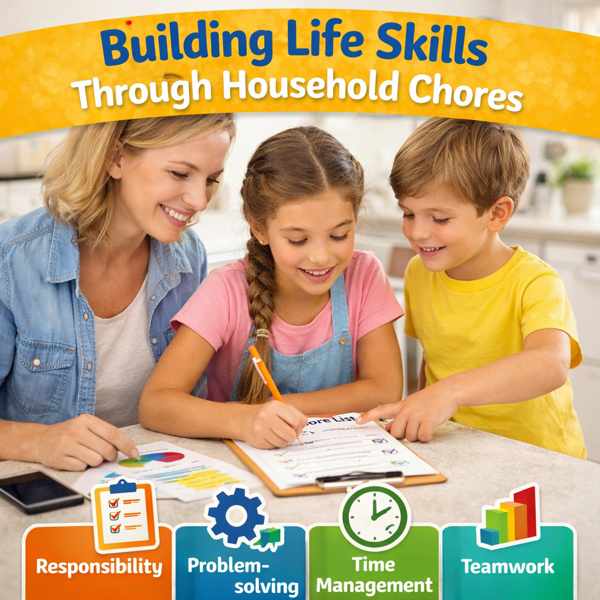
One of the most significant benefits of household chores for kids is the development of . From learning how to clean kitchen surfaces to organizing a chore list, children gain practical skills that will serve them throughout their lives. These skills include:
- Organization: Keeping track of tasks and maintaining order in the home.
- Time management: Balancing chores with school work and play.
- Problem-solving: Figuring out the best way to complete a chore or resolve conflicts with younger siblings.
- Communication: Discussing responsibilities and expectations with parents and other family members.
- Teamwork: Working together to accomplish household tasks efficiently.
2. Supporting Academic Learning
Household chores for kids can reinforce what . For example, measuring ingredients while cooking teaches math, following instructions develops reading skills, and sorting laundry enhances categorization abilities. These everyday tasks bridge the gap between home and school, making education a continuous process.
3. Fostering Responsibility And Independence
When children are given household chores, they learn to take ownership of their tasks. This sense of responsibility helps them become more independent and confident. Kids who regularly do chores are more likely to develop a strong work ethic and a positive attitude toward challenges.
4. Strengthening Family Bonds
Doing household chores for kids together as a family creates opportunities for communication, cooperation, and shared achievement. Family members can bond over activities like cooking, gardening, or cleaning, making kids happy and fostering a sense of belonging.
5. Teaching Respect And Empathy
When children see the effort that goes into maintaining a home, they develop respect for the work of others. Helping younger siblings with their chores or working together on a chore list teaches empathy, patience, and understanding.

Age Appropriate Chores For Kids
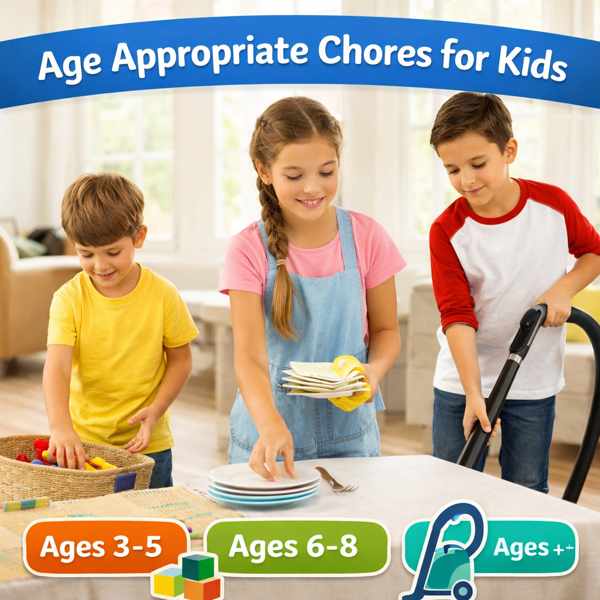
Assigning age-appropriate chores ensures that each child is given tasks they can safely and successfully complete. Here are some examples of appropriate chores for different children ages:
- Young children (ages 3-5): Picking up toys, putting away books, helping to set the table, sorting socks, watering plants, feeding pets, and helping to wipe surfaces.
- Children ages 6-8: Making the bed, folding laundry, feeding pets, helping to clean kitchen surfaces, sweeping floors, emptying small trash bins, and helping with meal prep.
- Older kids (ages 9+): Washing dishes, preparing simple meals, taking out the trash, helping with grocery shopping, assisting younger siblings with their chores, vacuuming, and organizing their own rooms.
For more ideas, parents can find free printable chore lists online that include daily and weekly household chores for kids by age group. These resources make it easy to assign age appropriate chores and track progress.
How To Adjust Chores For Different Ages
It’s important to match chores to children ages and abilities. Age appropriate chores for a preschooler might include putting toys in a bin or helping to water plants, while a teenager can handle more complex household tasks like mowing the lawn or managing laundry. As children grow, their responsibilities should increase to match their maturity and skills.
How To Make Household Chores For Kids Educational
- Be a role model: Show your child how to complete household tasks with a positive attitude. Children learn by example, so your enthusiasm and diligence will inspire them.
- Start early: Introduce chores as soon as your child is able to help, even with simple tasks. Early exposure builds good habits.
- Use a chore chart: Create a chore list or chart to track progress and celebrate achievements. Many free printable options are available online, making it easy to customize for your family.
- Teach life skills: Explain how household chores for kids teach important skills like organization, time management, and responsibility. Relate chores to real-world situations, such as budgeting or planning a meal.
- Encourage teamwork: Assign group tasks such as cleaning the kitchen or organizing a family event to build cooperation and communication.
- Offer guidance: Show children step-by-step how to complete new chores and provide support as needed. Demonstrate patience and give constructive feedback.
- Use positive reinforcement: Praise effort and improvement, not just results. Small rewards, such as extra playtime or a special treat, can motivate kids to keep helping with chores.
Turning Everyday Household Tasks Into Learning Moments
- Cooking and baking: Measuring ingredients teaches math; following recipes builds reading skills; preparing meals together strengthens family bonds. Assigning kids to help with meal planning and grocery shopping introduces them to budgeting and nutrition.
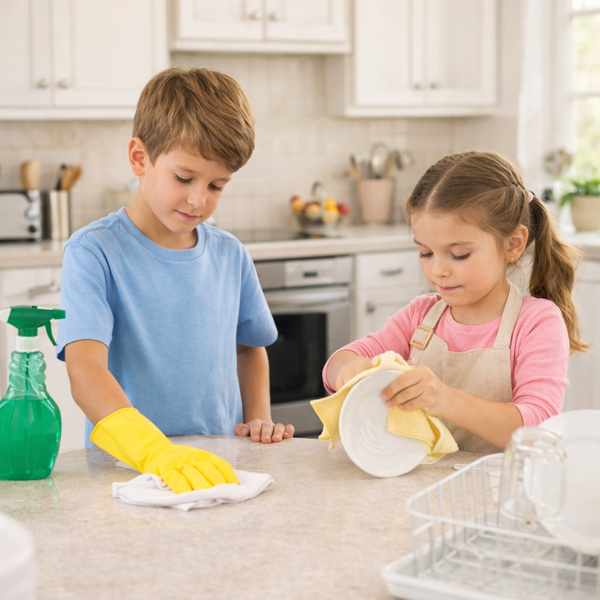
- Cleaning and organizing: Sorting laundry by color or type reinforces categorization; making a cleaning schedule teaches time management; organizing toys or books develops decision-making and spatial awareness. Assigning kids to clean kitchen counters or sweep floors teaches hygiene and responsibility.
- Budgeting and shopping: Creating a shopping list involves planning and writing; comparing prices teaches math and critical thinking; managing a budget introduces financial literacy. Involving children in these tasks helps them understand the value of money and the importance of making wise choices.
- Helping younger siblings: Older children can assist younger siblings with their chores, teaching leadership, empathy, and patience. This also fosters a sense of teamwork and cooperation within the family.
- Gardening and outdoor chores: Planting seeds, watering plants, and raking leaves teach biology, patience, and responsibility. Outdoor household tasks connect kids with nature and encourage physical activity.
Making Chores Fun And Engaging
To keep kids motivated, turn chores into games or competitions. Use timers to see how quickly tasks can be completed, or play music while cleaning. Offer choices so children feel a sense of control over their responsibilities. Celebrate successes with stickers, points, or small rewards. Remember, the goal is to make household chores for kids a positive and rewarding experience.
Overcoming Challenges: When Kids Resist Chores
- Explain the importance of household chores for kids and how they help the family. Discuss how everyone’s contribution makes the home a better place.
- Let children choose some of their tasks to give them a sense of control and ownership.
- Turn chores into games or competitions to make them more fun and engaging.
- Work together as a team to complete household tasks quickly and efficiently.
- Be patient and consistent—habits take time to develop. Encourage persistence and celebrate progress, no matter how small.
- Address resistance with empathy. Ask your child why they dislike certain chores and brainstorm solutions together.
Sample Chore List For Kids
| Age Group | Example Chores |
|---|---|
| 3-5 years | Pick up toys, help set the table, sort socks, water plants, put away books |
| 6-8 years | Make bed, fold laundry, feed pets, clean kitchen surfaces, sweep floors, empty small trash bins |
| 9-12 years | Take out trash, help cook, sweep floor, assist younger siblings, vacuum, organize room |
| 13+ years | Mow lawn, manage laundry, plan meals, grocery shopping, wash dishes, help with budgeting |
For more detailed lists, search for free printable chore lists online. These resources often include customizable chore charts and tips for assigning age appropriate chores.
Integrating Chores With School And Extracurricular Activities
Balancing household chores for kids with school and extracurricular activities can be challenging. Create a family schedule that includes time for chores, homework, and free time. Use a chore list or calendar to keep everyone on track. Encourage children to prioritize their responsibilities and manage their time effectively. This teaches valuable life skills that will benefit them in school and beyond.
Chores And Family Values
Household chores for kids are an excellent way to teach family values such as respect, cooperation, and gratitude. Discuss the importance of helping others and contributing to the home. Use chores as opportunities to talk about fairness, sharing, and the rewards of hard work. Encourage children to take pride in their tasks and celebrate their achievements as a family.
Using Technology To Manage Chores
There are many apps and online tools available to help parents manage household chores for kids. These tools can create chore lists, track progress, and even offer rewards for completed tasks. Many apps include free printable chore charts and allow children to check off their responsibilities as they go. Using technology can make chores more engaging and help kids stay organized.
Frequently Asked Questions
Should Kids Do Household Chores?
Yes! Household chores for kids are essential for teaching life skills, responsibility, and the value of hard work. They help children become independent, capable, and confident individuals.
How Can Parents Make Chores Enjoyable?
Make chores fun by playing music, setting challenges, or working together as a family. Celebrate successes and offer praise. Use chore charts and small rewards to motivate kids.
What Are Some Good Household Chores For Kids?
Tasks like setting the table, folding laundry, watering plants, organizing toys, and helping to clean the kitchen are great for children of all ages. Choose age appropriate chores that match your child‘s abilities.
Are There Resources To Help Parents Teach Chores?
Yes, many free printable chore lists, apps, and online guides are available to help parents assign age appropriate chores and track progress. These resources make it easy to organize household tasks and keep kids motivated.
How Do Chores Help With Life Skills?
Household chores for kids teach time management, organization, problem-solving, teamwork, and responsibility. These skills are valuable in school, at home, and in future careers.
How Can Chores Be Adapted For Children With Special Needs?
Break tasks into smaller steps, provide clear instructions, and offer extra support as needed. Choose appropriate chores that match your child‘s abilities and celebrate every achievement.
Conclusion
Household chores for kids are powerful tools for teaching life skills, building confidence, and strengthening family bonds. By involving children in household tasks from a young age, parents can help them become responsible, independent, and capable individuals. Use age appropriate chores, encourage teamwork, and make learning at home a daily adventure. With the right approach, household chores for kids become more than just work—they become opportunities for lifelong growth and success.
{
“@context”: “https://schema.org”,
“@type”: “FAQPage”,
“mainEntity”: [
{
“@type”: “Question”,
“name”: “Should kids do household chores?”,
“acceptedAnswer”: {
“@type”: “Answer”,
“text”: “Yes. Household chores for kids help children develop life skills, responsibility, and independence. Chores teach time management, teamwork, and prepare children for success at school and in daily life.”
}
},
{
“@type”: “Question”,
“name”: “How can parents make chores enjoyable for kids?”,
“acceptedAnswer”: {
“@type”: “Answer”,
“text”: “Parents can make chores more enjoyable by turning tasks into games, playing music, setting challenges, and working together as a family. Praise, encouragement, and small rewards also help motivate kids.”
}
},
{
“@type”: “Question”,
“name”: “What are good household chores for kids?”,
“acceptedAnswer”: {
“@type”: “Answer”,
“text”: “Good household chores for kids include setting the table, folding laundry, watering plants, organizing toys, helping clean the kitchen, and assisting younger siblings. Chores should always be age appropriate.”
}
},
{
“@type”: “Question”,
“name”: “Are there resources to help parents teach chores?”,
“acceptedAnswer”: {
“@type”: “Answer”,
“text”: “Yes. Parents can use free printable chore lists, chore charts, mobile apps, and online guides to assign age appropriate chores and track daily household tasks.”
}
},
{
“@type”: “Question”,
“name”: “How do household chores help children develop life skills?”,
“acceptedAnswer”: {
“@type”: “Answer”,
“text”: “Household chores help children develop life skills such as organization, time management, problem-solving, teamwork, and responsibility. These skills support success at school and at home.”
}
},
{
“@type”: “Question”,
“name”: “How can chores be adapted for children with special needs?”,
“acceptedAnswer”: {
“@type”: “Answer”,
“text”: “Chores can be adapted by breaking tasks into smaller steps, giving clear instructions, offering extra support, and choosing appropriate chores based on the child’s abilities and comfort level.”
}
}
]
}